Discover the importance of Annaizu Compliance Management in today's business landscape and how a Home Office compliance management platform can help your business streamline its compliance efforts, reduce risks, and stay ahead of regulations.
Published · Updated guidance for UK employers
Artificial intelligence is making its way into almost every stage of recruitment. Background checks are no exception. Software can help flag missing information, support identity verification and make large application workflows easier to manage. But can AI actually complete a DBS check, confirm someone's Right to Work, or decide whether they should be hired?
The honest answer is more nuanced than the headlines. AI can support parts of the process, but it does not replace official checks, legal eligibility rules or an employer's safeguarding responsibilities. And in 2026, those distinctions matter more than ever.
Digital is not automatically AI. Uploading a passport, receiving a DBS status update or completing a Home Office online check may involve established digital systems rather than artificial intelligence. Employers should ask providers precisely which parts of their service use AI, which use ordinary automation and which rely on official data sources.
How is AI changing background checks in the UK?
A background screening process can involve several separate checks: identity, criminal record disclosure, Right to Work, employment history, professional registrations and, where justified, financial checks. Each has different rules, and one does not substitute for another.
AI-based tools can assist with tasks such as reading submitted documents, finding apparent inconsistencies, routing cases to an appropriate reviewer or summarising information for an HR team. Rule-based automation can also send reminders and display application progress without using AI at all.
That distinction matters because the underlying result must still come from the appropriate authoritative source. A model-generated summary is not a DBS certificate. A facial comparison is not, by itself, a prescribed Right to Work check. And a risk score is not a legal basis for requesting an Enhanced disclosure.
Four areas where AI and automation can help
01. Identity verification
Suitable digital services can examine identity documents and verify a person's identity remotely. Some providers use biometric comparison or automated fraud detection. For DBS applications, the digital verification service must meet the official certification requirements.
02. Application quality
Systems can flag incomplete fields, inconsistent names or missing address history before submission. That can help staff resolve avoidable issues, but the applicant and processing organisation remain responsible for accurate information.
03. Workflow visibility
Dashboards and reminders can show which checks are requested, outstanding or complete. HR teams can spend less time chasing routine updates and more time reviewing exceptions. These benefits do not require every feature to be AI-powered.
04. Review support
AI may help organise or summarise recruitment material, but information must be verified against its original source. Employers should avoid using unsupported AI inferences, unverified web searches or opaque suitability scores as grounds to reject candidates.
Digital identity checks: a genuine 2026 development
In guidance updated on 6 October 2026, DBS confirmed that certified digital verification services can be used to meet identity requirements for Basic, Standard and Enhanced DBS applications, including eligible barred list checks. Under that guidance, the minimum identity assurance level is medium for Basic and high for Standard and Enhanced checks.
The certified provider must comply with the relevant UK digital identity trust framework and DBS supplementary code. Registered Bodies and Responsible Organisations still have duties, including due diligence, risk assessment and checking information required for the application. Read the official DBS digital identity guidance.
Right to Work checks are a separate legal process
The Home Office updated its employer's Right to Work guide from 1 October 2026. Employers must follow one of the prescribed routes appropriate to the worker's circumstances. These can include a Home Office online share-code check, an acceptable manual document check or a permitted identity service provider route for eligible British and Irish citizens.
Document scanning or AI assistance does not, on its own, establish the statutory excuse against a civil penalty. Employers must complete the required process, satisfy themselves that the person presenting for work is the person checked and retain the prescribed evidence.
Can AI carry out a DBS check?
No independent AI tool can issue an official DBS certificate or bypass the DBS disclosure process. In England and Wales, the Disclosure and Barring Service processes criminal record applications, with police involvement where applicable. Screening software can help collect information and manage applications, but cannot substitute its own database search for an official Basic, Standard or Enhanced check.
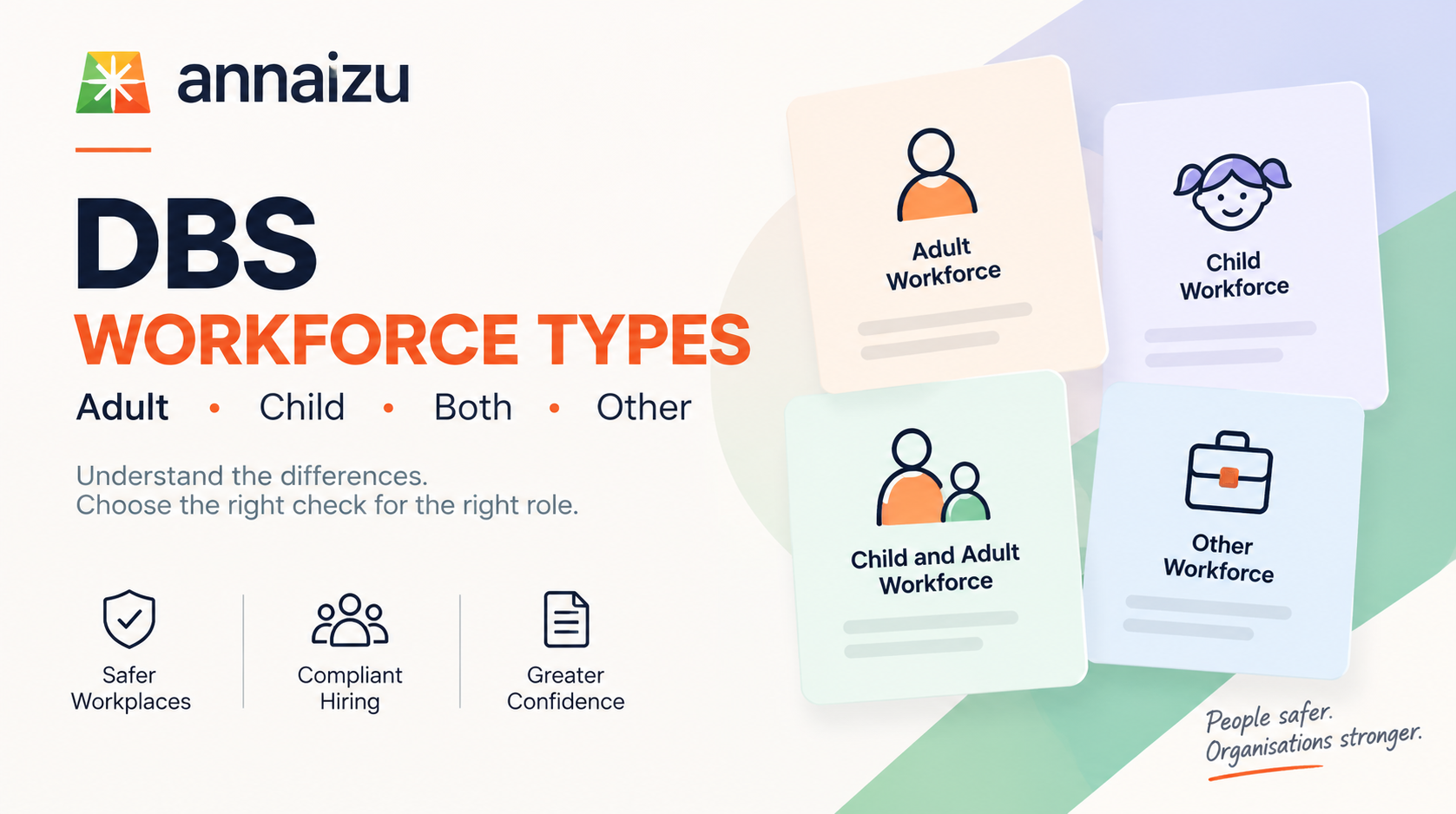
Nor does AI decide which level an employer may request. A Basic check has broader availability; Standard and Enhanced checks, and any barred list information, require a legal eligibility basis linked to the actual duties. See our guides to Basic, Standard and Enhanced DBS checks and DBS workforce types.
What about ongoing AI monitoring? The official DBS Update Service lets eligible employers check the status of a subscribed person's Standard or Enhanced certificate with consent, subject to same-workforce, type and level requirements. DBS states that it does not automatically notify employers when a status changes. Employers must carry out their own permitted status checks. It is not a universal, continuous AI criminal-record monitoring service.
DBS checks also do not prove a person's Right to Work, professional competence or general suitability. A safe hiring decision brings together the evidence relevant to the role.
AI background screening and UK law: what changed in 2026?
1. Automated hiring decisions face real safeguards
The Data (Use and Access) Act 2025 amended the UK's data protection framework, including provisions on significant automated decisions. The ICO confirmed that the Act's data protection provisions were in force by 19 June 2026. The changes provide more flexibility to use automated decision-making in some circumstances, but they do not remove requirements for lawfulness, fairness, transparency and safeguards. Additional restrictions apply where special category data is involved.
In its 31 March 2026 findings, the ICO described engaging with more than 30 employers and writing to 16 organisations likely to be using automated decisions about candidates. Its priorities included testing for bias, telling applicants how automated decisions are used and explaining how people can challenge an outcome and obtain human review.
2. Criminal record information needs extra protection
DBS records and related vetting information are criminal offence data. The ICO explains that employers need an Article 6 lawful basis and, under Article 10 of the UK GDPR, either official authority or a relevant condition under Schedule 1 of the Data Protection Act 2018. Simply asking a candidate for consent does not remove those requirements.
Background screening should be limited to what is relevant and proportionate for the role. The ICO says criminal offence vetting is often high risk and commonly requires a Data Protection Impact Assessment (DPIA). Employers should decide why the information is needed, who may access it, how long it will be kept and whether a screening provider uses it to train models. See the ICO's pre-employment vetting guidance.
3. AI does not automatically remove bias
In 2024, the ICO audited developers and providers of AI recruitment tools and made almost 300 recommendations to improve privacy and information rights. Some concerns involved unfair filtering and insufficient explanations to candidates. AI systems can reproduce bias in training data or introduce new errors. A consistent algorithm is not necessarily a fair one.
Employers should test tools on relevant scenarios, look at error rates and challenge discriminatory outcomes. The ICO's AI recruitment procurement guidance asks organisations to examine providers' DPIAs, accuracy, bias mitigation and privacy information before deployment.
4. Credit and social media screening must be justified
AI does not create permission to investigate every candidate's financial history or online activity. The ICO says employers must not run credit reference checks routinely; they need a reason connected to the position and must explain the check to candidates early. Public social media vetting also requires a documented, proportionate purpose, transparency and care not to rely on inaccurate or irrelevant content.
Mass scraping or AI-generated conclusions about someone's character are not a safe shortcut. The ICO advises giving candidates an opportunity to explain discrepancies, and keeping online vetting separate from final recruitment decisions where appropriate. See its guidance on credit checks and social media vetting.
AI in background checks: advantages and risks at a glance
| Potential benefit | Risk to manage | Employer safeguard |
|---|---|---|
| Faster document review | Misread names, identity mismatches or rejected genuine documents | Provide an accessible alternative and a route for human correction |
| More consistent application checks | Bad rules applied at scale or inappropriate disclosure levels | Verify role eligibility and test exception handling |
| Less administration | Sensitive candidate information exposed to unnecessary systems | Minimise data, control access and set retention rules |
| Faster candidate triage | Unfair automated rejection or unexplained suitability scores | Audit for bias and offer meaningful review and challenge routes |
| Clearer progress reporting | Dashboard status mistaken for a final legal result | Confirm the official outcome and keep evidence before approving work |
For sectors such as care, healthcare, education, hospitality and recruitment, the value is not simply speed. It is the ability to reduce avoidable administration without losing the evidence, oversight and judgement that safe recruitment requires.
An eight-point checklist before adopting AI screening tools
- Map each check to its purpose. Separate DBS, Right to Work, identity, references and any other lawful screening requirement.
- Confirm the legal entitlement. Check Standard, Enhanced and barred list eligibility against the actual job duties before requesting disclosure.
- Ask what is truly AI-powered. Request an explanation of data sources, decision rules, accuracy testing and failure handling.
- Check provider credentials. Where digital identity is used for DBS, verify certification against the relevant trust framework and supplementary code.
- Assess privacy and security. Establish lawful bases, criminal offence data conditions, retention periods, supplier contracts and whether a DPIA is required.
- Build in human oversight. Ensure reviewers can investigate discrepancies and candidates have a practical route to correct or challenge outcomes.
- Keep an auditable record. Retain appropriate evidence of checks, decisions, dates and follow-up actions, without storing more sensitive information than necessary.
- Review performance regularly. Monitor errors, possible bias and changes to Home Office, DBS and ICO requirements.
For hiring teams: a system that gives you a confident-looking answer is not enough. You need to know what was checked, where the result came from, who reviewed any discrepancy and why the role qualified for that check.
What is the future of AI in UK background screening?
Better document handling, clearer workflows and more usable identity verification are realistic areas for development. Employers may see more tools that prioritise exceptions, connect recruitment steps and help managers find missing evidence. Those are potential directions, not a guarantee that any particular product already performs them.
More advanced screening also creates difficult questions: How can a candidate dispute a false match? Does the system perform equally well across different groups? Can an employer explain an automated rejection? Which organisation is responsible if a third-party tool gets it wrong?
The direction of the ICO's 2026 work is clear: innovation can proceed, but organisations must be able to explain their systems, test outcomes and protect applicants' rights. For employers, the strongest approach is to use technology to support reliable checks and reserve high-impact judgements for accountable people.
Bring your DBS checks into one clearer workflow with Annaizu
New technology does not need to become another disconnected system. Annaizu helps UK employers manage online DBS applications and track their progress alongside wider workforce compliance processes.
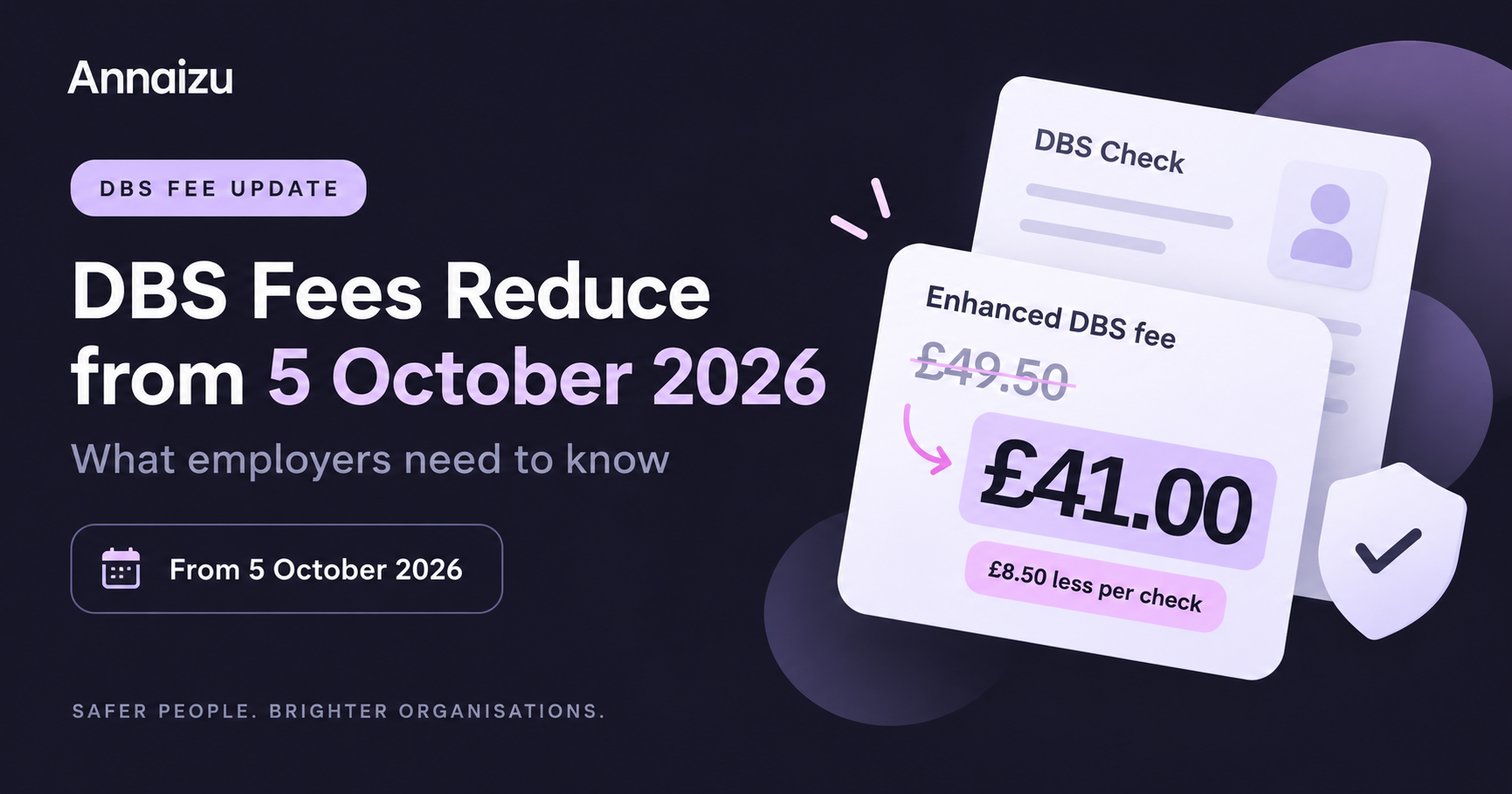
Through Annaizu, employers can request and track eligible Basic, Standard and Enhanced DBS checks, subject to the correct role requirements. Enhanced DBS checks are available from £46 per check in qualifying volume bands. The applicable price depends on check type, volume and terms shown on the live pricing page.
We support the application workflow. DBS issues the certificate, and the employer remains responsible for legal eligibility, interpreting results and making employment decisions. We do not present Annaizu's workflow tools as an AI criminal-record decision engine.
From £46 applies to qualifying volume-based Enhanced DBS pricing. Statutory DBS fees are included where applicable. VAT and eligibility conditions apply as shown on the pricing page. Prices checked 23 October 2026.
Frequently asked questions about AI background checks
Can artificial intelligence replace an Enhanced DBS check?
No. An Enhanced DBS check is an official disclosure issued through the Disclosure and Barring Service process for legally eligible roles. AI can assist an administrative workflow, but cannot issue the certificate or grant the legal entitlement to request it.
Are AI-powered identity checks accepted for DBS applications?
Digital identity verification can be accepted where the service meets DBS certification rules and the required confidence level. That does not mean any facial recognition app or AI document scanner is sufficient. The updated 6 October 2026 DBS guidance explains what certified services and processing organisations must do.
Can AI confirm a candidate's Right to Work in the UK?
Technology may assist a prescribed Right to Work process, but an AI prediction or document scan alone is not enough. Employers must follow the applicable Home Office route and retain evidence in line with the current employer guidance.
Can an employer automatically reject a candidate based on an AI score?
Automated hiring decisions with legal or similarly significant effects are subject to UK data protection rules and safeguards. Employers must assess the lawful basis, transparency, fairness and applicable rights to challenge and human review. A score alone is not a reliable substitute for a proportionate, evidence-based decision.
Does the DBS Update Service automatically alert employers to new convictions?
No. The Update Service can show eligible certificate status changes, but DBS says it does not automatically notify employers. Employers must carry out lawful status checks with consent, and only for the correct level, type and workforce of certificate.
What is the biggest privacy risk of AI background screening?
It depends on the system, but using more personal data than necessary, processing criminal offence information without the required legal conditions, retaining sensitive records too long, or making opaque decisions can all create significant risks. The ICO recommends careful assessment before deploying AI recruitment tools.
This article is general information about background screening and data protection in England and Wales, with UK-wide Right to Work considerations. Criminal record disclosure arrangements differ in Scotland and Northern Ireland. It is not legal advice. Employers should consult the current guidance and obtain specialist advice where required.