

Discover the importance of Annaizu Compliance Management in today's business landscape and how a Home Office compliance management platform can help your business streamline its compliance efforts, reduce risks, and stay ahead of regulations.
A rota is usually treated as an operational tool: it shows who should work, when they should arrive and where they should be. For an organisation employing sponsored workers, however, it can also form the starting point of an important evidence trail.
If someone asks what happened during a particular week, a published rota should help establish the plan. Attendance records should show what happened in practice. Timesheets, payroll records, employee files and follow-up notes should then explain any difference. When those records connect, managers can answer questions quickly. When they do not, even a routine shift change can become difficult to evidence.
Why rota records matter for sponsor compliance
Licensed sponsors have responsibilities that include monitoring sponsored workers, keeping relevant records and reporting certain problems or changes to UK Visas and Immigration. Current sponsor guidance also makes clear that failure to meet these duties can lead to action against a sponsor licence.
A rota does not satisfy every sponsor duty by itself. It is useful because it establishes intended work: the worker, role, date, hours and location. When it connects to attendance, approval and workforce records, it helps the organisation show not only what was planned but how exceptions were identified and handled.
The five links in a clear evidence chain
A strong working record connects five types of information.
- Planned shift: who was scheduled, in which role, at what time and at which location.
- Actual attendance: when the worker clocked in and out, with location context where appropriate.
- Approved time: the timesheet reviewed by a manager, including any correction or approved change.
- Workforce record: the employee profile, contract and relevant documents that explain the employment context.
- Compliance action: the explanation, escalation or report recorded when an exception requires follow-up.
The strength of this chain depends on consistency. One system does not need to perform every task, but the records should agree and managers should know where the final version is held.
Where rota evidence commonly breaks
The biggest risk is often not the scheduling tool itself. It is the gap between different versions of events. A manager may update a rota while an old screenshot remains in circulation. A shift swap may be agreed in a message but never added to the main schedule. The timesheet may be adjusted without an approval note, or payroll may contain hours that do not match either the rota or attendance record.
Location data can create another break. If the rota names one site, the clock-in record uses a second label and the employee file lists a third, the organisation may need extra time to show that all three refer to the same workplace. Repeated absence can also be noticed informally but left without a documented review or outcome.
These are ordinary operational issues, but they become compliance problems when nobody can explain which record is correct, who approved the change or what action followed.
A mismatch does not explain itself
Consider the fictional training example from the presentation. The rota schedules 39 hours. Clock-ins show 28 hours attended. A timesheet is adjusted to 35 approved hours, while payroll records 42 hours paid. The manager says that changes were agreed in messages.
None of those figures automatically proves wrongdoing, but the difference needs an evidence-based explanation. Was a clock-in missed? Was additional work authorised? Did the timesheet correction include a note and approver? Was payroll adjusted for holiday, back pay or another reason? An explanation held only in one person’s memory is difficult to retrieve and harder to verify.
Start with a clear record of intended work
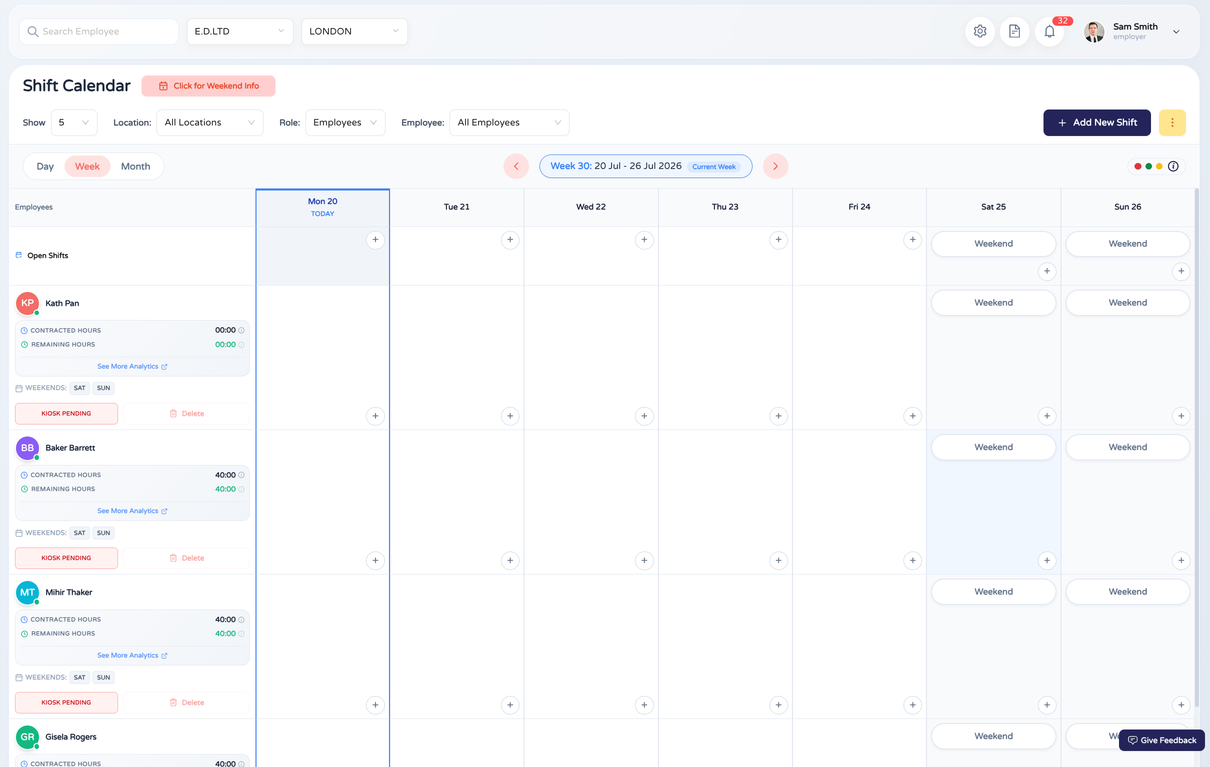
Good evidence begins before the shift. Managers should build the rota with the correct person, role, location, start time and finish time. Reusable templates can speed up recurring patterns, but each schedule still needs to reflect real availability and coverage.
Availability checks reduce avoidable conflicts before shifts are assigned. Once the rota is published, employees need access to the current version and prompt notification of changes. Annaizu’s shift planning and availability tools support drag-and-drop scheduling, templates, availability checks and instant publishing.
Capture what actually happened
The planned rota should then be compared with actual attendance. App-based clock-ins and clock-outs give employees a direct way to record their start and finish. Geolocation checks can add workplace context where their use is appropriate, transparent and consistent with the organisation’s policies.
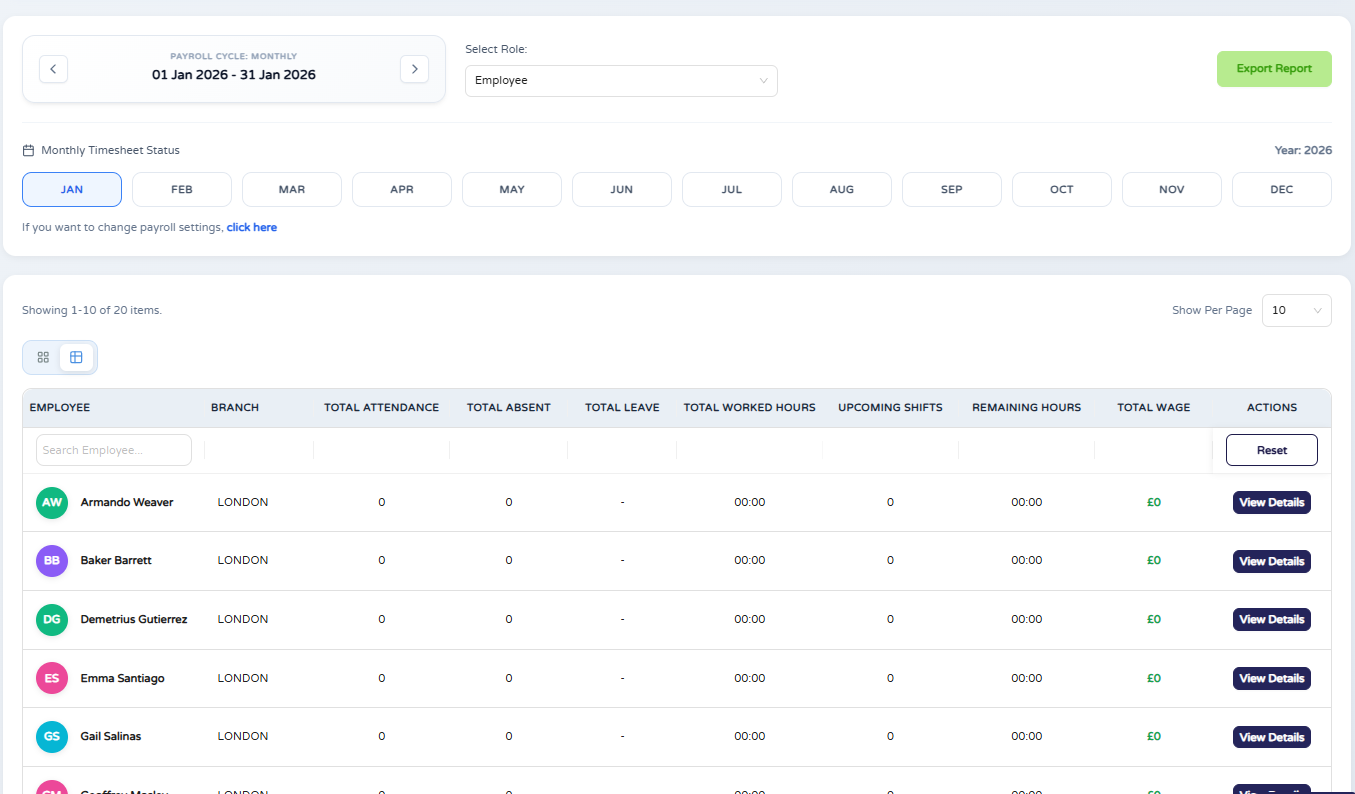
Automatic timesheets turn those attendance events into reviewable hours. The important control is manager review before payroll. Differences are easier to investigate while the shift is recent and the people involved can still confirm what happened.
Use cost and payroll data as another check
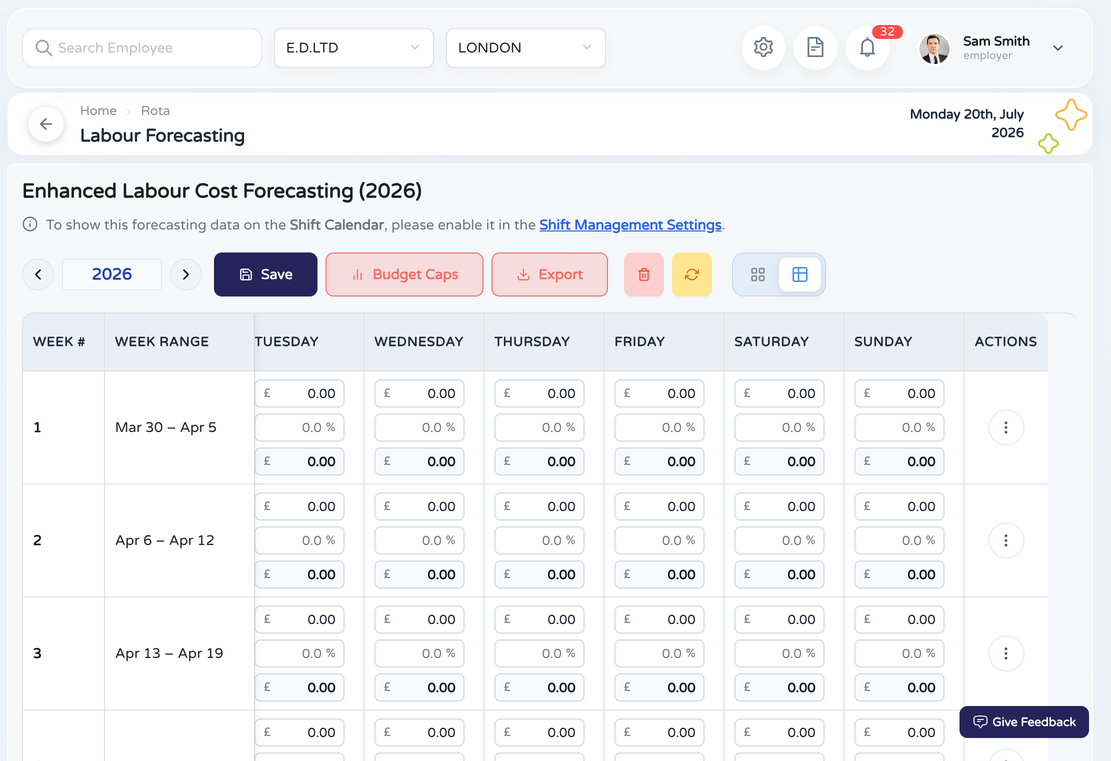
Labour cost information is not only useful for budgeting. It can also help managers spot unusual patterns early. Comparing scheduled hours, actual attendance, approved time and payroll cost can reveal a gap that needs investigation before records are finalised.
Forecasting tools help managers understand the cost of a rota decision before publishing and plan staffing around demand. The control remains the same: exceptions should be reviewed, resolved and recorded rather than carried forward unexplained.
Turn reports into recorded action
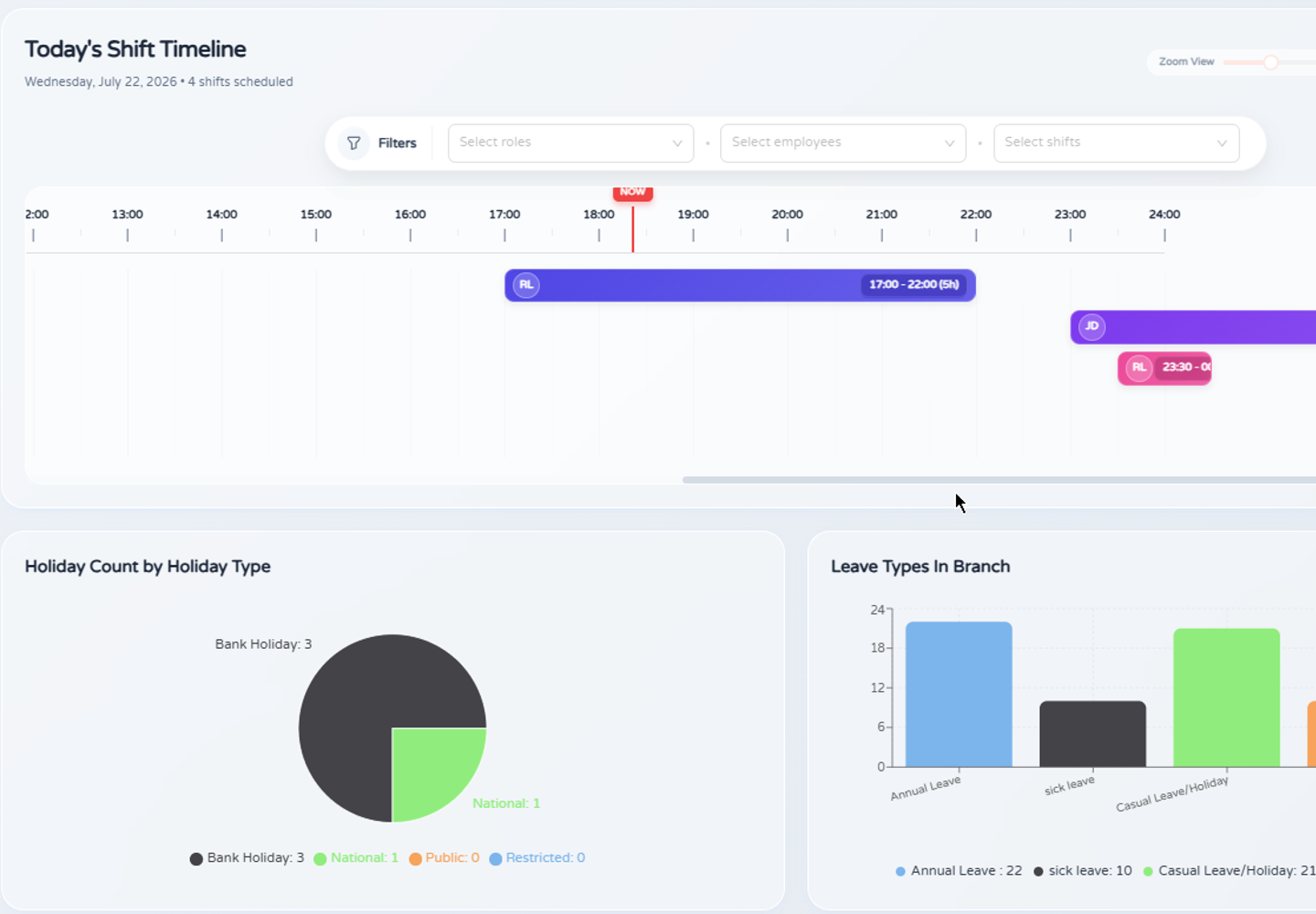
Dashboards and reports make patterns visible: attendance exceptions, overtime, total workforce hours, labour costs and wider compliance information. Visibility is only the first step. A practical workflow is to review the exception, assign responsibility and record the outcome.
Employee records provide the context behind that outcome. Contracts, documents, leave and absence information should sit close enough to the rota that a manager can understand the issue without searching through disconnected folders and inboxes.
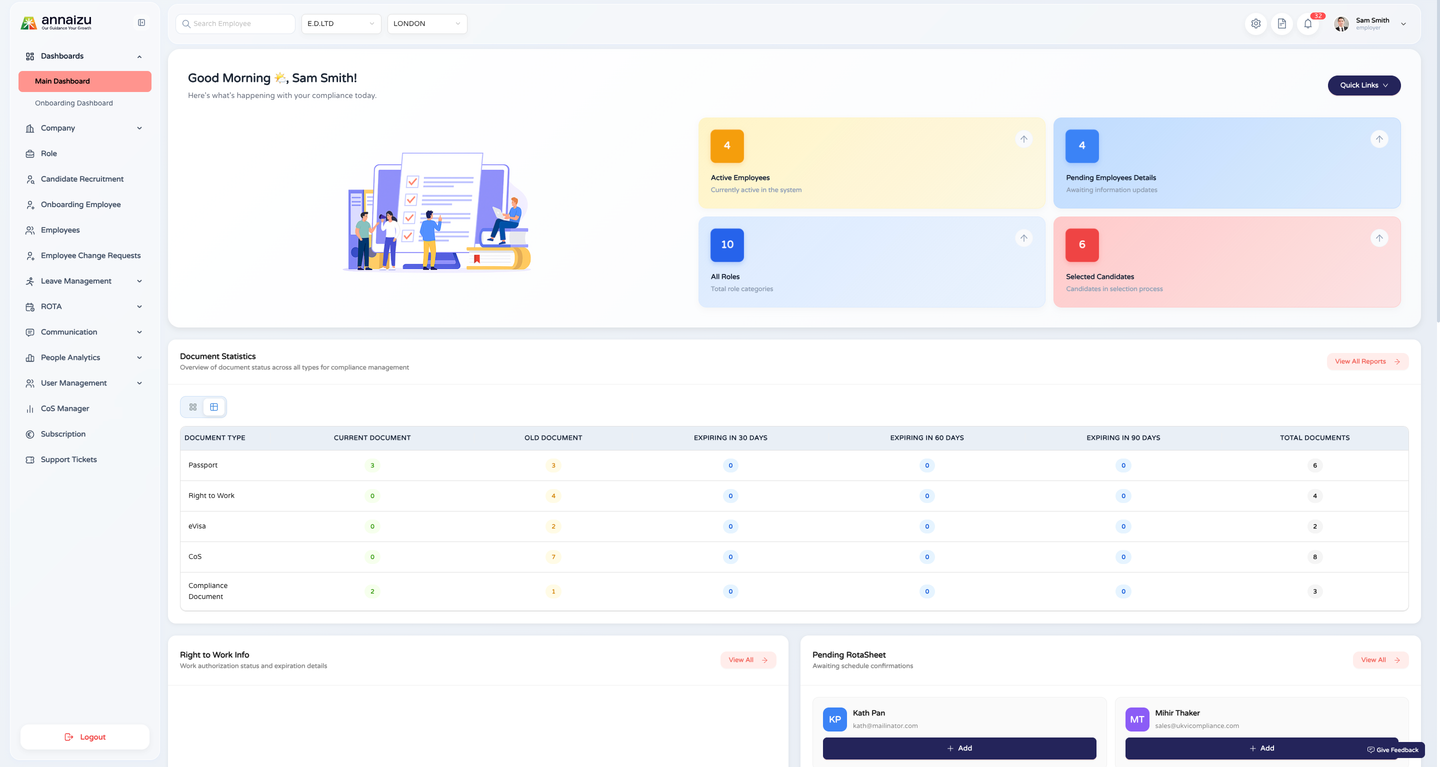
A practical seven-step workflow
For one sponsored worker, the presentation reduces the process to seven practical steps:
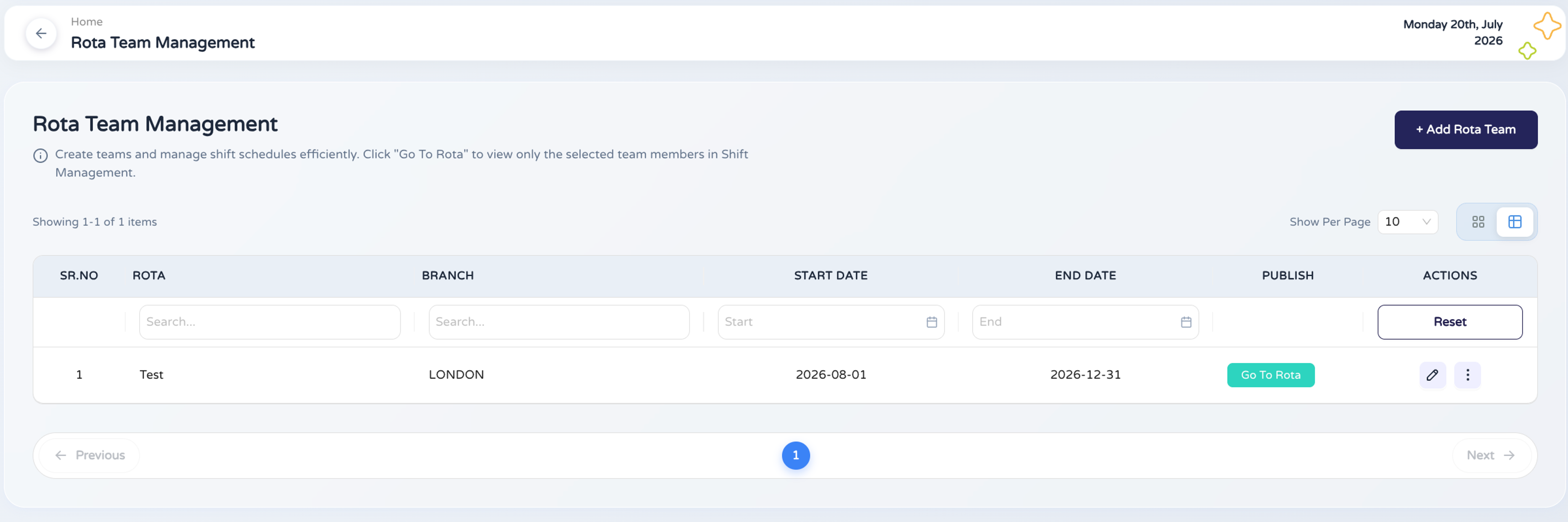
- Create and publish the shift with the correct time and location.
- Confirm the worker can see the shift in the mobile app.
- Capture the clock-in and clock-out.
- Review the timesheet against the planned shift.
- Check attendance and cost reports for an exception.
- Open the employee record and document the follow-up.
- Prepare payroll only after the review is complete.
Six questions to test your readiness
Choose one sponsored worker and one recent week. Then test whether your organisation can answer these questions promptly:
- Who was scheduled to work?
- What role and location were assigned?
- What hours were actually worked?
- Who approved a change or corrected a record?
- Were repeated absences or other patterns identified?
- What follow-up was completed, and where is it recorded?
If producing the answer requires messages from several people, multiple spreadsheets and a manager’s memory, the evidence chain is too fragile. The aim is one current rota, traceable changes and a documented route from exception to outcome.
Connect the working record
Annaizu’s rota and workforce management software brings shift planning, attendance, automatic timesheets, labour forecasting, mobile updates, reporting and employee records into a connected platform.
The practical benefit is not simply faster rota creation. It is the ability to move from planned work to real attendance, approved time and recorded follow-up without losing the context between systems. That makes workforce decisions easier to manage and the underlying evidence easier to produce.
Final takeaway
Your rota is the beginning of the evidence trail, not the end. A clear process connects who was expected to work with who actually worked, what was approved, what was paid and what action followed. When those records agree, an organisation is better placed to manage its workforce confidently and respond to compliance questions with one version of the truth.




.svg)